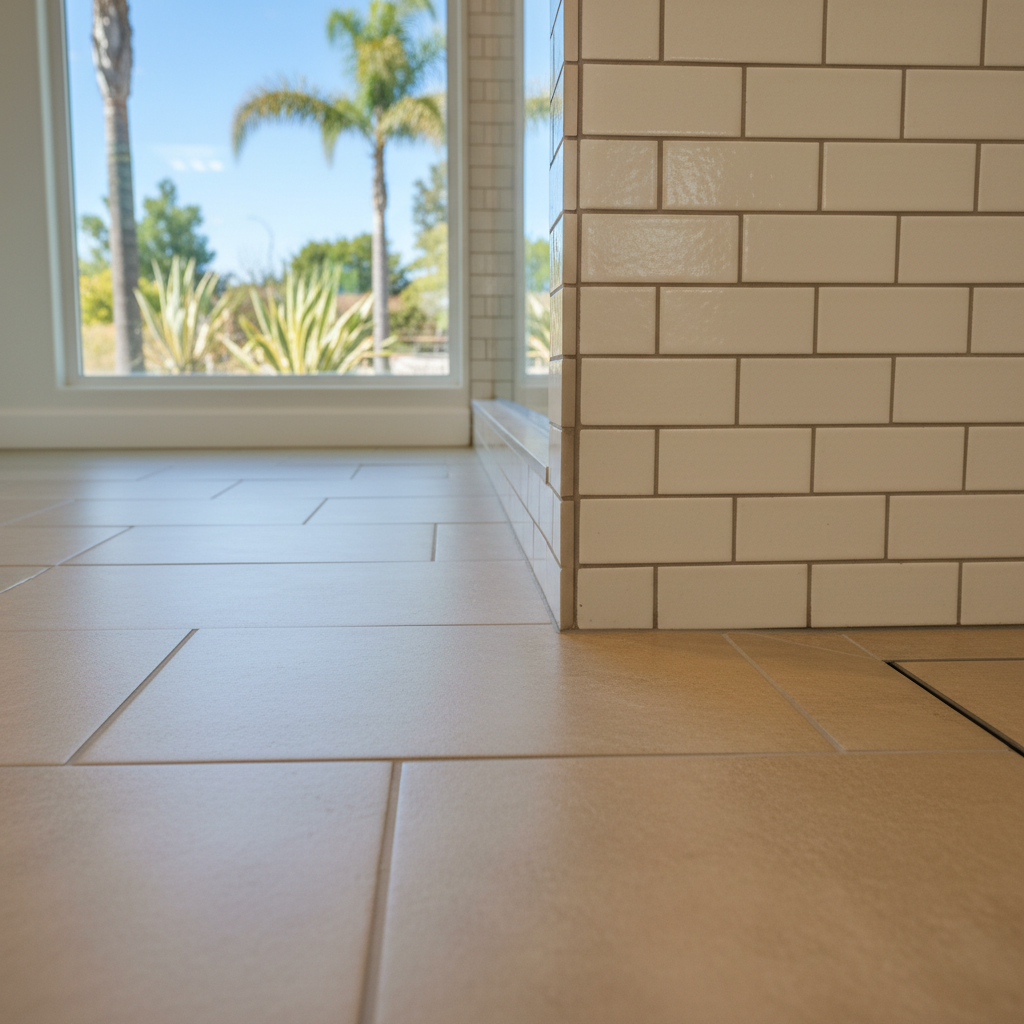
Tackling a new tile or flooring project can transform a room, but it is easy to bite off more than you can handle. If you live around Fullerton, you know our local homes deal with everything from shifting slab foundations on heavy clay soil to older subfloors that need some serious repair before any new material goes down. Whether you are redoing a powder room off Harbor Boulevard or updating an entire floor, knowing where to draw the line between a weekend project and a professional job will save you time, money, and stress.
Before You Lay a Single Tile: Preparation
Getting the subfloor right is the most important part of the whole job, and it is usually where do-it-yourselfers get into trouble. If your subfloor is not flat, clean, and structurally sound, your gorgeous new tile is going to crack six months down the road. Here is how to break down the prep work:
- Tear up old carpet or floating laminate yourself to save some cash.
- Check the subfloor for moisture and levelness using a long straight edge.
- Call Fullerton Bathroom Solutions if you find uneven concrete slabs or rotted wood subflooring that requires structural leveling.
Older homes in neighborhoods near Downtown Fullerton often have out-of-level floors due to decades of minor settling. Slapping luxury vinyl plank or large-format porcelain tile over an uneven surface creates major problems. Fullerton Bathroom Solutions has the self-leveling compounds and grinding tools to get the canvas flat before Tile Installation begins.
During the Project: Execution and Mess
Once installation day arrives, things get loud and messy quickly. If you are putting down simple luxury vinyl plank in a square room, you can probably handle the cuts with a utility knife and a chop saw over a weekend. But if you are dealing with natural stone or porcelain tile in a wet area like a shower or bathroom floor, the complexity increases significantly.
Tile Installation requires precise spacing, consistent thinset mortar mixing, and accurate wet-saw cuts around door frames and plumbing fixtures. Mistakes here are permanent and painfully obvious. Also, grouting and sealing need to be done right the first time to prevent moisture from seeping into the subfloor. When Fullerton Bathroom Solutions is on-site working for local homeowners, we use specialized dust-containment systems because nobody wants masonry dust coating every surface of their house.
After Installation: Curing and Upkeep
You survived the Tile Installation, but the job is not done yet. Let the materials cure. Walking on fresh tile too soon or turning on in-floor heating systems before the mortar completely dries will compromise the bond. Give grout and thinset adequate time to cure according to manufacturer instructions. Once everything is set, make sure you seal your grout lines if you used natural stone or standard cement grout, especially in high-moisture spaces. Routine sweeping and damp mopping with a pH-neutral cleaner will keep your new floors looking sharp for 15 to 20 years or more without stripping the finishes.